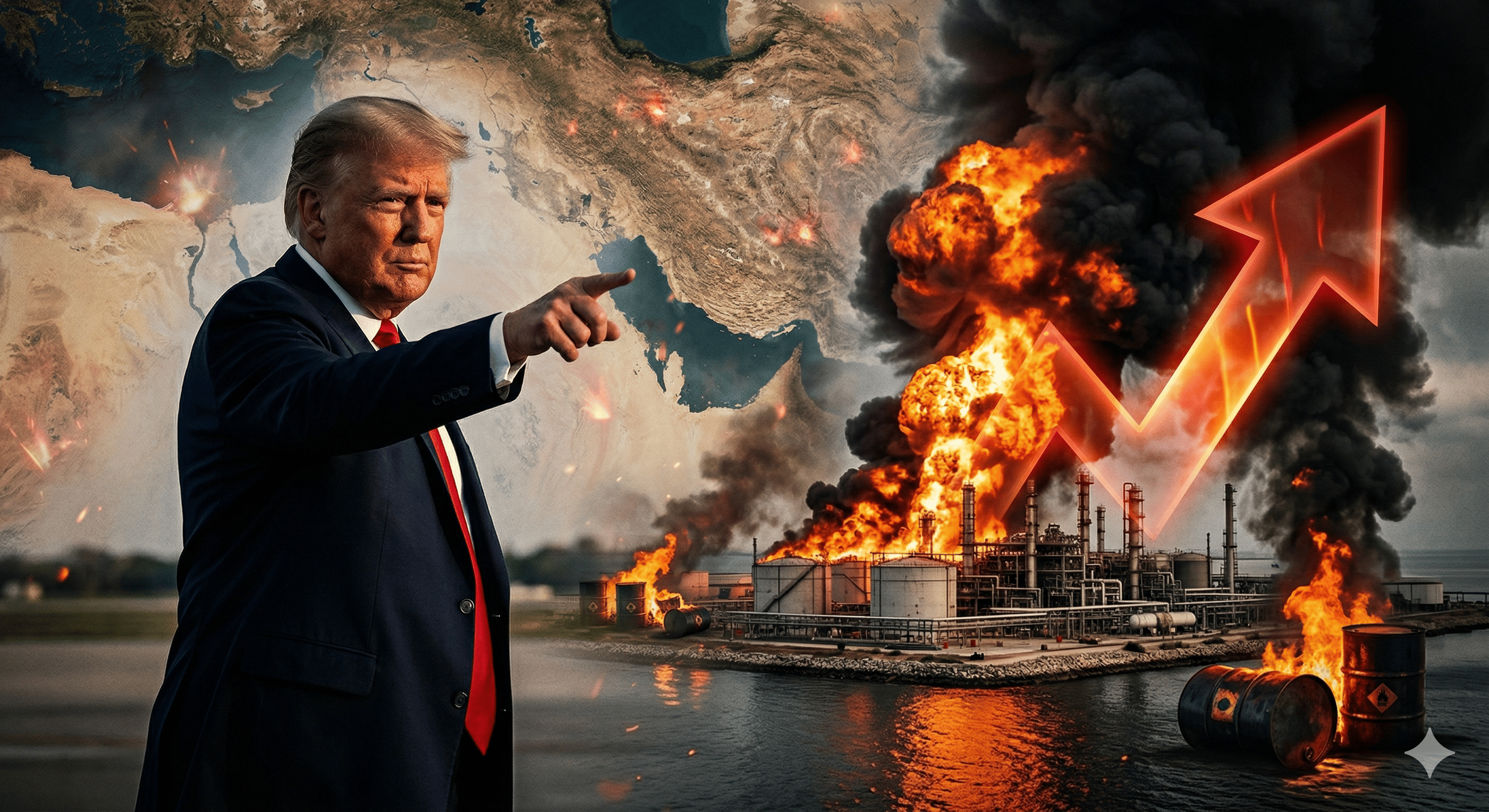
The ongoing tensions in the Middle East have taken a sharp turn after former US President Donald Trump made a bold and controversial statement regarding Iran’s oil resources. In an interview with the Financial Times, Trump suggested that the United States could consider taking control of Iran’s oil infrastructure, calling it his “favourite thing.” His remarks have quickly drawn global attention, raising concerns about the direction of the conflict and its broader implications.
At the centre of this discussion is Kharg Island, Iran’s primary oil export hub. Located in the Persian Gulf, the island plays a critical role in Iran’s economy, handling nearly 90 percent of the country’s oil exports. Any move targeting Kharg Island would not only impact Iran but could also disrupt global energy markets significantly.
Trump compared the potential strategy to earlier US actions in Venezuela, where Washington took steps to gain control over oil assets during political instability. He hinted that similar measures could be applied in Iran, although he acknowledged that such an operation would require a sustained military presence. “Maybe we take Kharg Island, maybe we don’t. We have a lot of options,” he said, indicating that the idea is still under consideration.
His comments have sparked debate among experts and policymakers. Many analysts warn that attempting to seize Kharg Island would be highly risky. The island is strategically located, and any military operation there could expose US forces to significant threats. Experts believe that Iran could retaliate by targeting shipping routes or deploying mines in the Persian Gulf, making the region even more volatile.
The Strait of Hormuz, a crucial global oil transit route, is already under pressure due to ongoing tensions. Any escalation involving Kharg Island could further disrupt shipping in the area. This is particularly concerning because a large portion of the world’s oil supply passes through this narrow waterway. Even minor disruptions can lead to sharp increases in global oil prices.
In addition to his remarks about seizing oil, Trump also made an unusual claim that Iran had effectively given the United States a “gift” by allowing more oil tankers to pass through the Strait of Hormuz. According to him, the number of tankers had increased significantly. However, this claim has not been independently verified, and experts remain cautious about its credibility.
Trump’s tone during the interview also stood out. He dismissed critics of his approach, referring to them as “stupid people,” and defended his stance by emphasizing the strategic importance of controlling energy resources. His direct and unapologetic language has added to the controversy surrounding his statements.
The potential implications of such a strategy are far-reaching. For countries like India, which rely heavily on oil imports, any disruption in supply from the Middle East can have immediate economic consequences. Rising oil prices can lead to higher fuel costs, increased inflation, and pressure on government budgets.
Meanwhile, Iran has maintained that its leadership remains stable despite reports of internal changes. The country continues to assert control over its key infrastructure and has not indicated any willingness to concede to external pressure.
As the conflict enters a critical phase, Trump’s remarks highlight a growing shift in how geopolitical strategies are being discussed. The open linking of military action with economic gain marks a significant departure from traditional diplomatic language. Whether these statements translate into actual policy decisions remains to be seen.
For now, the situation remains uncertain. However, one thing is clear: any move involving Kharg Island would have major consequences, not just for the Middle East, but for the entire global economy.